


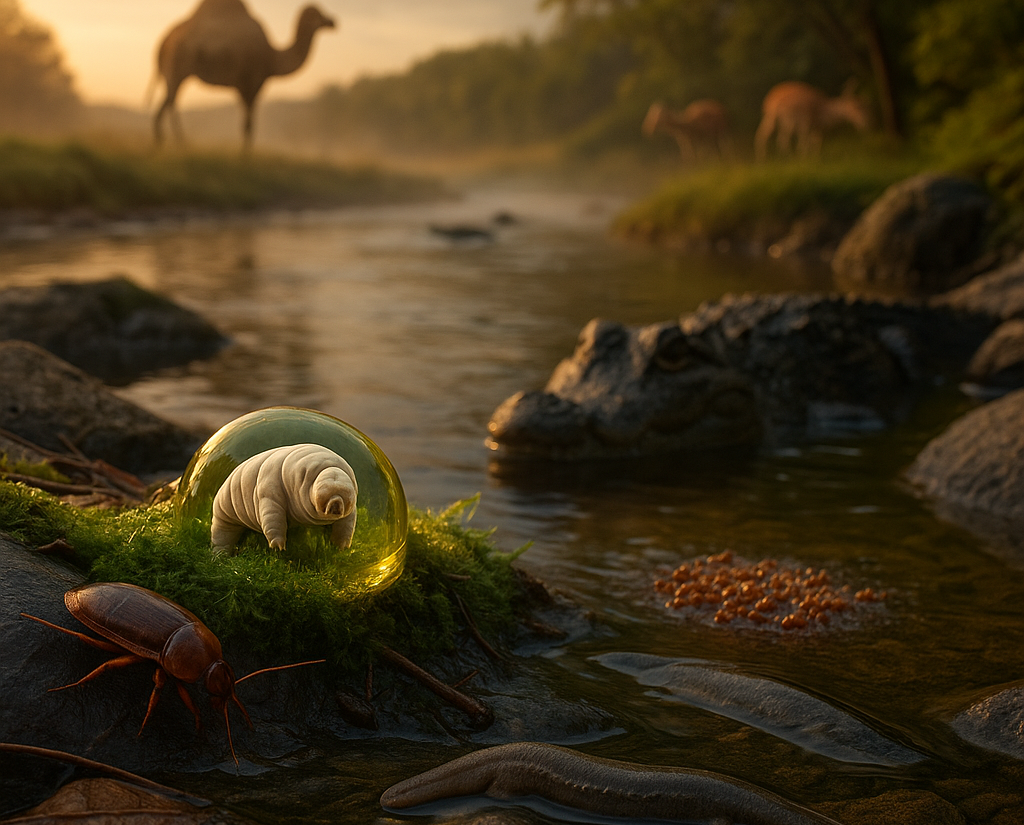
Tardigrade
They are known as the most resilient creatures on Earth. These microscopic beings, also called water bears, can survive temperatures of -272°C, the vacuum of space, and even nuclear radiation. To do this, they resort to cryptobiosis, whereby they almost completely shut down their metabolism.
Viermii plați
They are known for their amazing regenerative abilities: if cut into several pieces, each piece can regenerate into a new individual, with the growth of new tissue, skin, intestines and even a new brain.
Kitchen beetles They can survive for weeks without food, days without water, or even… without their heads – because their nervous system is fragmented, allowing them to function partially even after severe trauma.
Dromedaries (Camelus dromedarius) They can survive for weeks without water and withstand temperatures exceeding 50°C. To do so, they have unique adaptations: they store fat in their humps, produce highly concentrated urine, and their cells can withstand dehydration without deteriorating.
Salmon
They have extraordinary physical endurance, muscular strength and highly developed senses, enabling them to navigate in harsh conditions. They migrate thousands of kilometres from the ocean to fresh water, swimming against the current to reproduce.
Saiga antelopes (Saiga tatarica) They live in some of the most hostile steppes of Central Asia and can migrate hundreds of kilometres in just a few days. It is an endangered species, characterised by its special, trumpet-like nose. With it, the antelope warms the cold air and filters out dust, enabling it to survive in extreme climates.
Fire ants (Solenopsis invicta)
Together, these ants can overcome floods. During Hurricane Harvey in Texas in 2017, groups of ants were seen forming ‘living rafts’ – complex, temporary biological structures that enabled the colony to survive.
Crocodiles
Crocodiles have existed on Earth for over 200 million years, surviving mass extinctions. Their natural armour protects their bodies, and their exceptional muscular strength combined with ambush hunting makes them formidable predators. In addition, crocodiles can survive without food for months, thanks to their highly efficient metabolism.


