
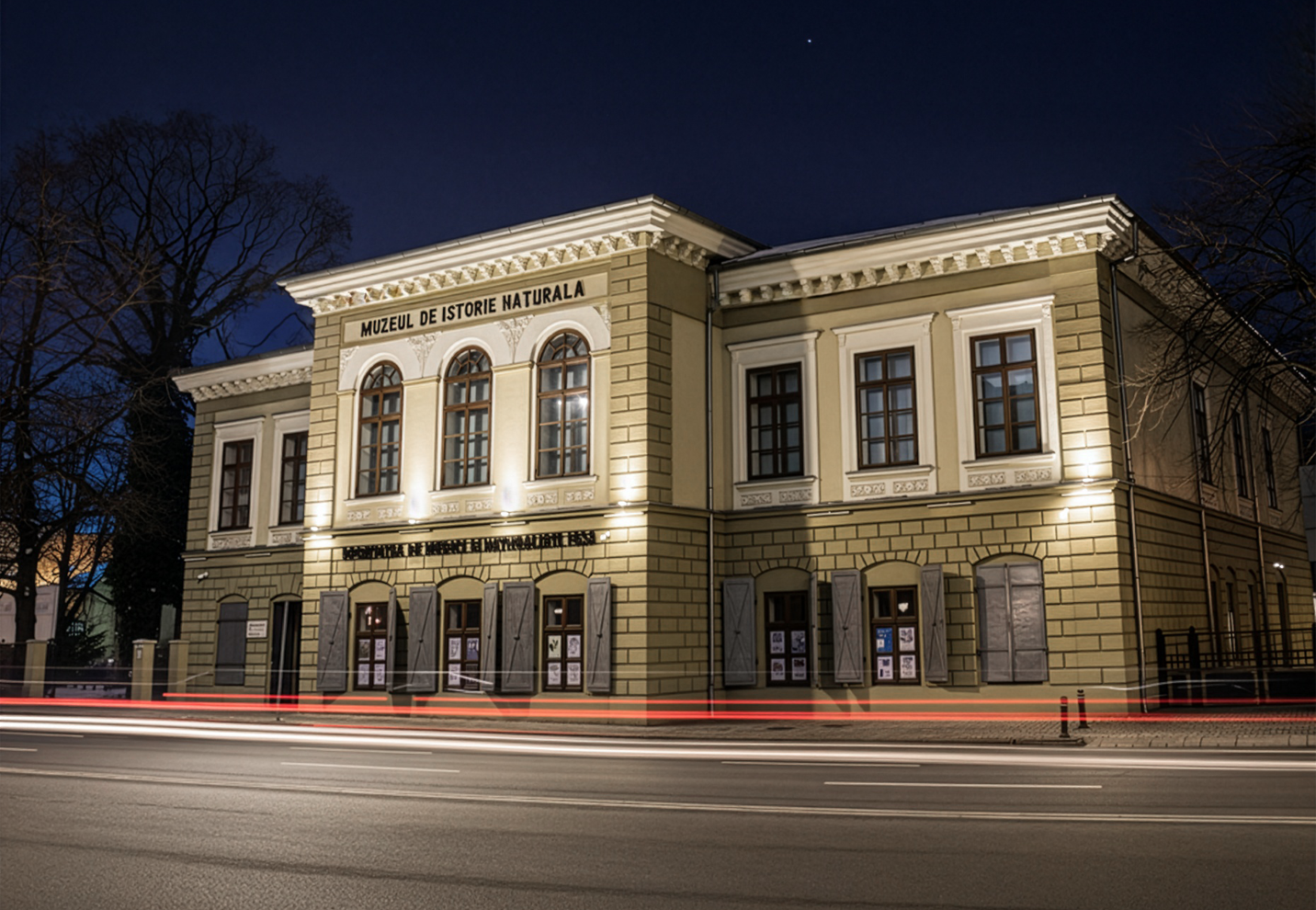
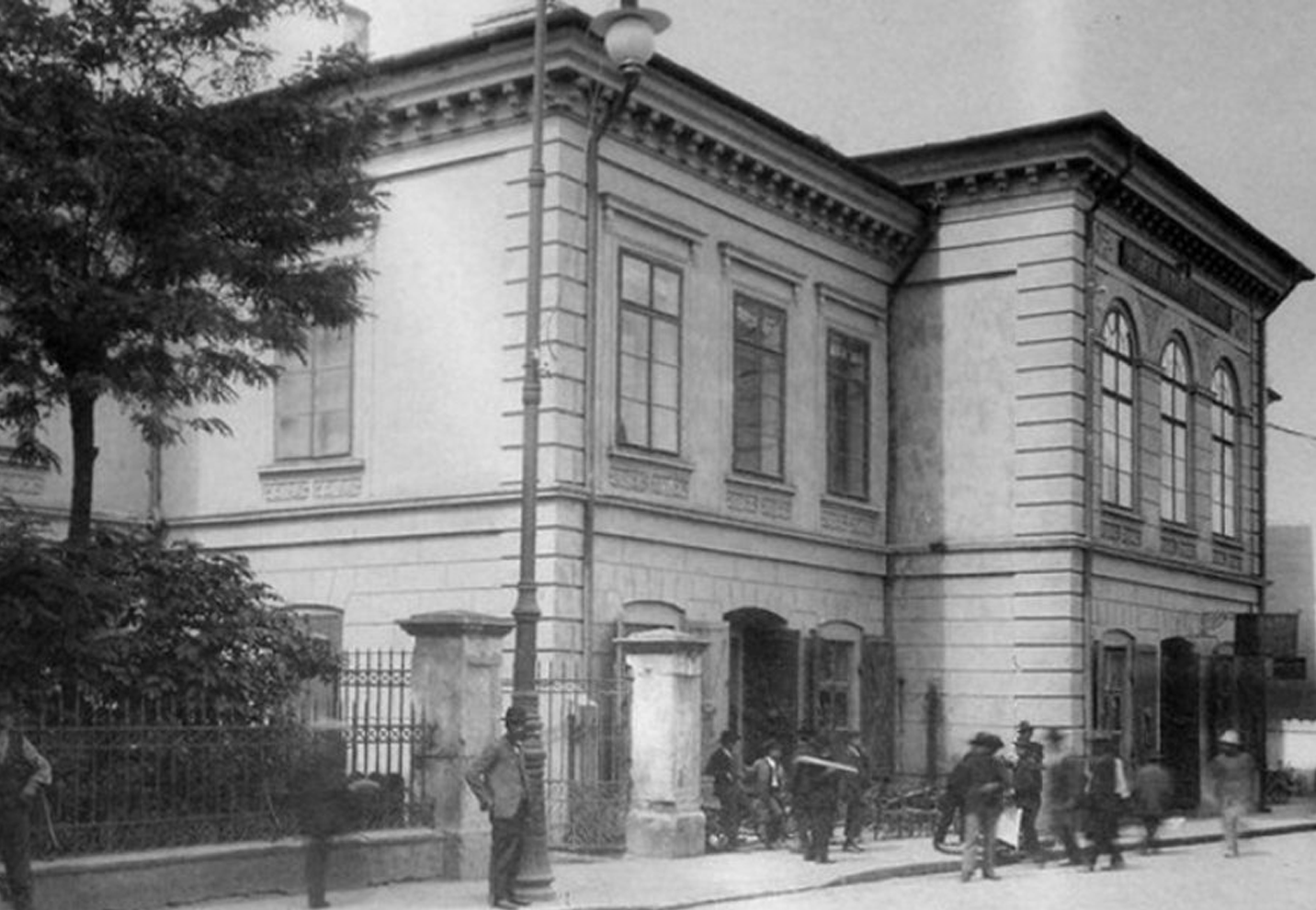
The Natural History Museum of Iași was founded on February 4, 1834, at the initiative of a small group of members of the Society of Physicians and Naturalists of Iași, led by Iacob Cihac, Gheorghe Asachi, Mihail Zotta, Constantin Sturza, and Costachi Negri. It is the first museum of its kind established in the Romanian Principalities and, as a cultural institution of primary importance in the country, aimed to present to the public of Iași the “earthly and subterranean riches of Moldova, as well as curiosities from other parts of the world.”
The solemn inauguration of the Museum took place in the Balș house, on Podu Verde Street, today Carol I Boulevard.
The Museum operated in this house until 1838, when it moved to the Great Hall of the Mihăileană Academy. In 1840, the house of the chancellor Costachi Sturza, on Hagioaiei Street, today Independence Boulevard no. 16, was bought for the Museum, a building in which the Museum, together with the Society of Physicians and Naturalists, still operates today.
The building, also known as the Roset House, was built at the end of the 18th century, in a neoclassical style, with a carriage arch, being today one of the few architectural monuments of Iași with a ground floor structure formed of vaulted arches. To meet the growing needs of the Museum, the “Interior Department”, through Order No. 11.599 from April 16, 1844, approved the vacant ground east of the Museum to be arranged into a public market for the sale of agricultural products: hay, flour, honey, wine, firewood, timber, etc. Producers paid a tax that benefited the Society and the Museum. The public market was abolished in 1872 when, at the initiative of Grigore Cobălcescu and Anastasie Fătu, the place was enclosed and a small Botanical Garden was organized, where Dimitrie Brândză, the Museum’s conservator at that time, planted various trees, including two centuries-old oaks, declared in 1973 Monuments of Nature. The Natural History Cabinet became known to the public also because, in one of its rooms, deputies from the National Party decided Colonel Alexandru Ioan Cuza’s candidacy for the rule of Moldova on the night of January 3/15, 1859. The building is declared a historical and architectural monument, registered in the National Cultural Heritage of Romania, position IS-II-m-B-03917 (RAN: 95079.13), from the List of Historical Monuments in Iași county.
The Natural History Museum of Iași plays an essential role in the conservation, documentation, and interpretation of the natural heritage accumulated over nearly two centuries of existence.
It is an educational and recreational center, facilitates public access to knowledge of nature through exhibitions, programs, and activities, contributes to the formation of ecological awareness, and raises awareness of environmental protection.
In article 5 of the purchase project of the house, in 1834, it is mentioned: “The purchase of this house is specially destined for the Natural History Cabinet or Museum, being made for the public good.”
1834The first museum of its kind established in the Romanian PrincipalitiesFounded on February 4, 1834, at the initiative of a small group of members of the Society of Physicians and Naturalists of Iași, led by Iacob Cihac, Gheorghe Asachi, Mihail Zotta, Constantin Sturza, and Costachi Negri.
- Colonel Alexandru Ioan Cuza was proposed as the sole candidate for ruler of Moldova in the heart of the building1859
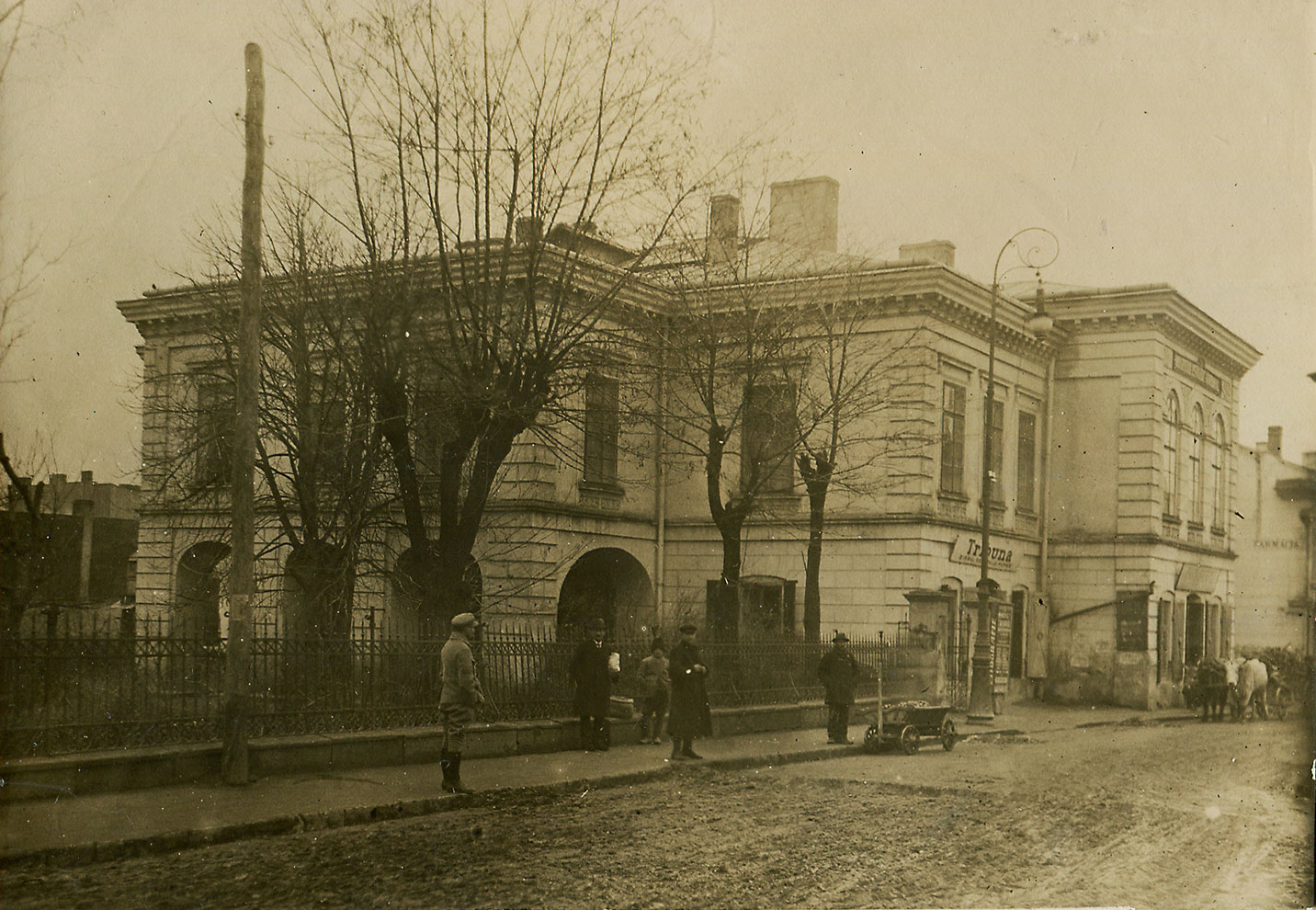
In the heart of the old building of the Natural History Cabinet in Iași, one of the most emotional pages of Romanian history was written. Here, on the night of January 3/15, 1859, deputies of the National Party gathered in secrecy, in a tense atmosphere, to make a decision that would change the destiny of Moldova. After long discussions, they proposed Colonel Alexandru Ioan Cuza
as the sole candidate.
2025The Museum is undergoing the most extensive process of restoration and reorganization of the permanent exhibitionThrough this extensive process of restoration and reorganization, we are enhancing the scientific and architectural heritage, integrating contemporary methods of exhibition and interpretation. The objective is to offer a coherent, rigorous, and accessible experience for today's public.
Founded on February 4, 1834, at the initiative of a small group of members of the Society of Physicians and Naturalists of Iași, led by Iacob Cihac, Gheorghe Asachi, Mihail Zotta, Constantin Sturza, and Costachi Negri.

In the heart of the old building of the Natural History Cabinet in Iași, one of the most emotional pages of Romanian history was written. Here, on the night of January 3/15, 1859, deputies of the National Party gathered in secrecy, in a tense atmosphere, to make a decision that would change the destiny of Moldova. After long discussions, they proposed Colonel Alexandru Ioan Cuza
as the sole candidate.

Through this extensive process of restoration and reorganization, we are enhancing the scientific and architectural heritage, integrating contemporary methods of exhibition and interpretation. The objective is to offer a coherent, rigorous, and accessible experience for today's public.

A short description could follow here. Lorem Ipsum is simply dummy text of the printing and typesetting industry.
A short description could follow here. Lorem Ipsum is simply dummy text of the printing and typesetting industry.

A short description could follow here. Lorem Ipsum is simply dummy text of the printing and typesetting industry.


A short description could follow here. Lorem Ipsum is simply dummy text of the printing and typesetting industry.

A short description could follow here. Lorem Ipsum is simply dummy text of the printing and typesetting industry.

A short description could follow here. Lorem Ipsum is simply dummy text of the printing and typesetting industry.